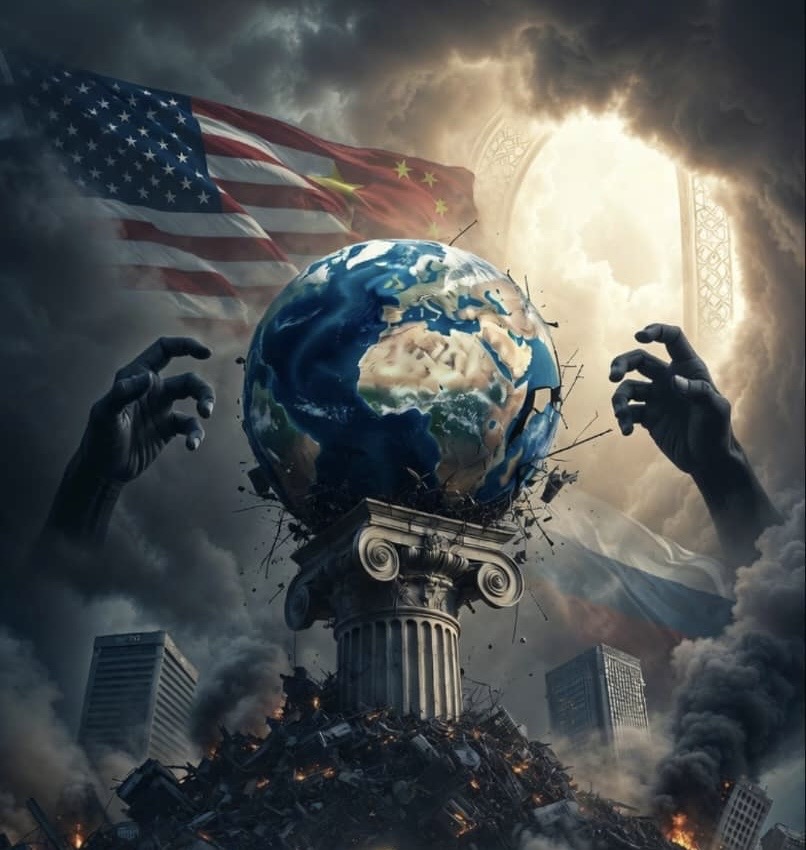
The post-Cold War world order is facing a deep and multi-layered crisis that shows not only increasing tension, but also the gradual collapse of the structures governing international relations.
Signs of the crisis:
1. Weakening of international rules!
Countries increasingly prefer short-term national interests to multilateral obligations and implement rules selectively.
2. Great power competition!
The competition between the United States, China, and Russia has become a key factor in instability and has weakened global cooperation.
3. Ineffectiveness of international institutions!
Outdated structures and great power differences have made institutions like the United Nations incapable of responding quickly.
4. Simultaneity of crises!
Wars, economic crises, and regional tensions have simultaneously increased the pressure on the international system.
Transition to a new order:
The old order is weakening, but the new order has not yet been formed; the world is in a transitional and uncertain phase that has brought with it consequences such as increased instability, decreased predictability, and the movement of countries from cooperation to competition.
Conclusion:
What we are witnessing today is not a temporary crisis, but a structural transformation in the global system. Between the collapse of the old order and the formation of the new order, the world has reached its most unstable and unpredictable state.
This situation is a strategic opportunity for awakened nations, especially Muslims. The vacuum caused by the erosion of the international order and the lack of committed leadership has created a space for them to offer a new alternative, relying on their more than a thousand years of experience in leadership and governance, and to strengthen the axis of Muslim unity on the path to shaping a more just order based on genuine values.
*Crisis of the World Order; The Collapse of a Framework and the Search for a New Order!*