War Against Digital Eyes: The Struggle Over the Right to See in the Age of Technology
By: Omid Behrouz
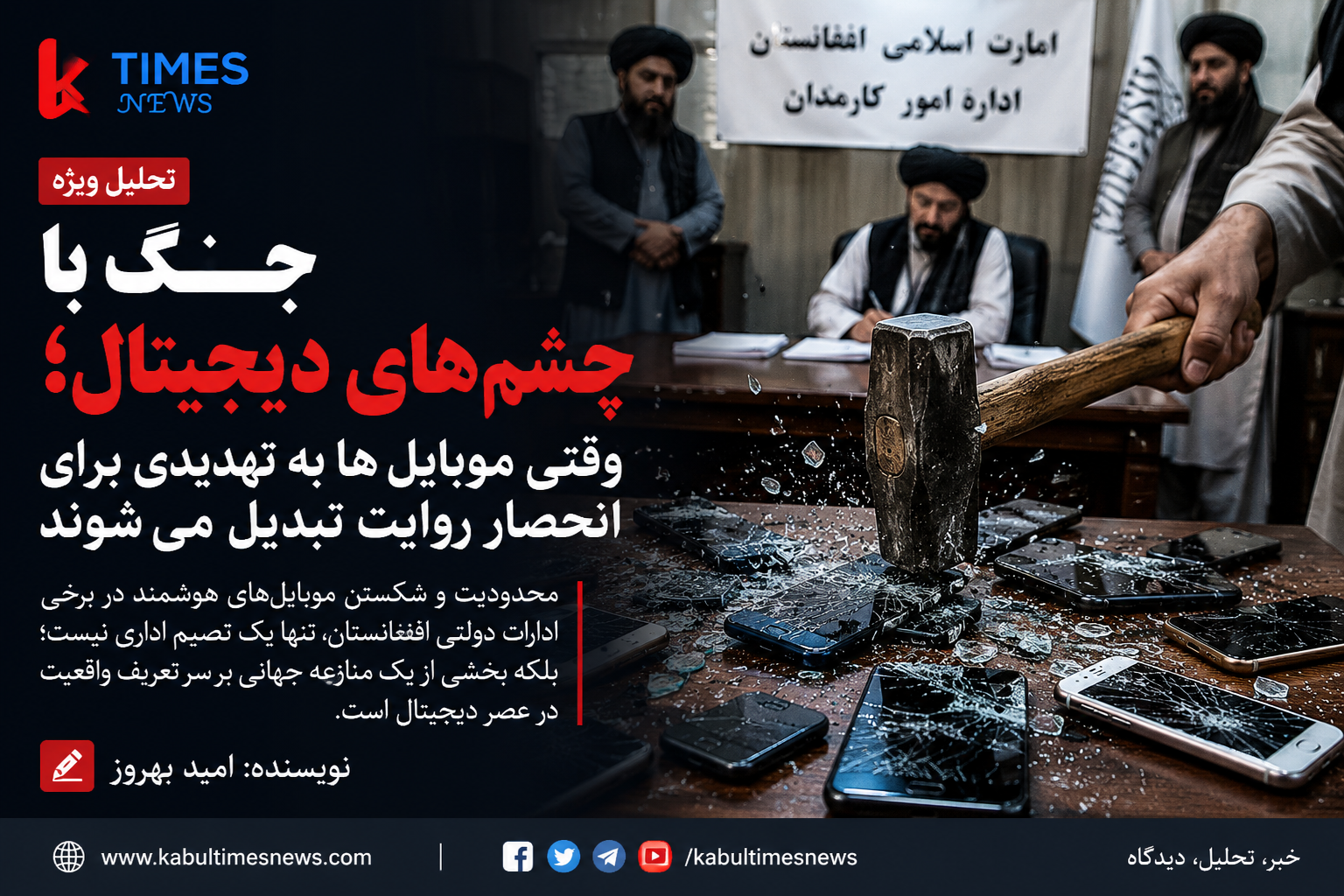
The sound of smartphones being smashed in some government offices across Afghanistan is more than the noise of shattered glass and plastic; it echoes a deeper concern — the fear of being seen and documented.
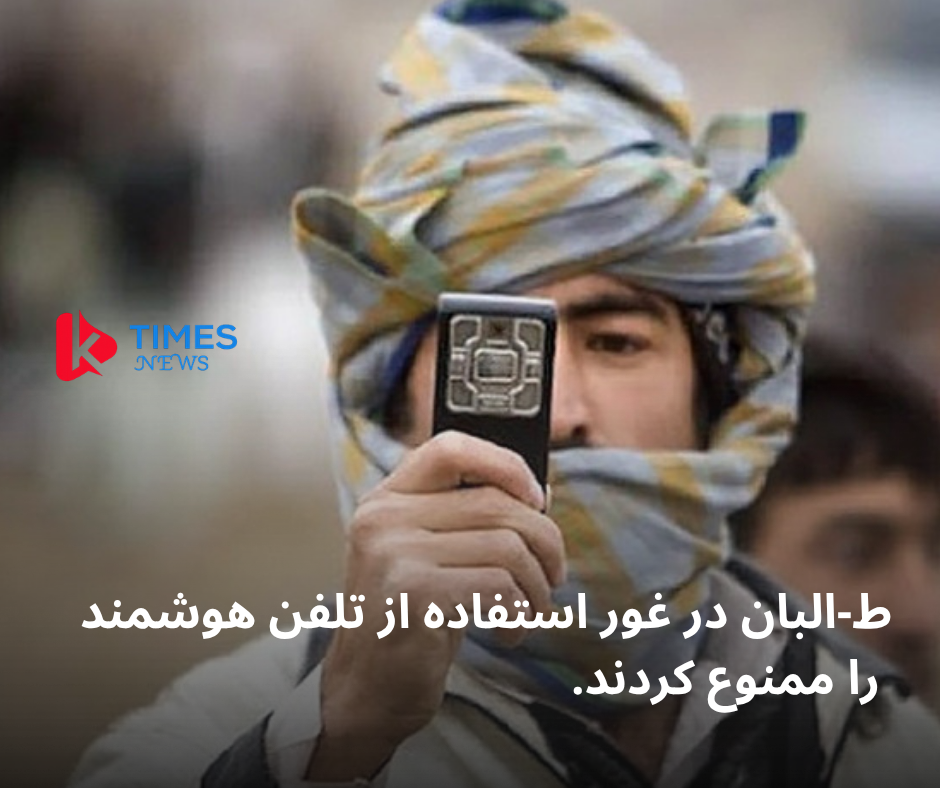
In recent days, reports and accounts from several Afghan provinces have indicated that the use of smartphones has been restricted or prohibited for certain government employees. In some cases, these measures have reportedly led to the confiscation and even destruction of mobile devices. Such incidents have been reported in provinces including Herat, Balkh, Samangan, Khost, and Logar, sometimes accompanied by administrative or disciplinary warnings.
At first glance, these actions may appear to be security measures aimed at preventing information leaks or managing internal communications. However, beneath the surface lies a more fundamental issue: controlling the ability to record and share reality.
From Communication Tool to Instrument of Witnessing
In today’s world, a smartphone is no longer merely a communication device. It is simultaneously a camera, an archive, a publishing platform, and a media outlet. Anyone carrying a smartphone is not only a user but also a potential witness.
This transformation has fundamentally altered traditional structures of power and information. For the first time in history, the ability to document events has moved beyond the exclusive control of governments and major media organizations and into the hands of ordinary citizens.
In the past, those in power largely determined what could be seen. Today, in the digital age, the act of seeing is no longer easily monopolized.
Afghanistan and a Global Trend
What is unfolding in Afghanistan does not exist in isolation. In recent years, governments around the world have sought to limit digital tools, social media platforms, and even internet access when faced with political or security challenges.
While the methods vary, a common objective often emerges: managing the flow of information and controlling what can be documented, viewed, and shared.
From this perspective, Afghanistan is part of a broader global tension between technologies that enhance transparency and systems of power that seek greater control over information.
The Real Issue Goes Beyond Smartphones
At the heart of this debate, the issue is not the smartphone itself. Rather, it is the reality that in the digital era, every individual can simultaneously act as a witness, storyteller, and publisher. This development has challenged the monopoly over narratives.
Today, a single image or video can question official accounts and expose the gap between lived realities and institutional narratives. This has become one of the defining political and social challenges of the digital age.
Breaking Phones: An Administrative Measure or a Political Message?
In this context, restricting or destroying smartphones is not merely an administrative act. It can also be interpreted as an effort to limit the independent recording of reality.
Yet experience has shown that attempts to suppress tools of documentation and communication often increase their political and social significance. In other words, efforts to silence the eyes may ultimately make them more visible.
From Censorship to Self-Censorship
The consequences of such policies extend beyond government offices. When documenting and sharing reality becomes risky, individuals gradually become less willing to record, publish, and narrate events.
At that stage, control shifts from external enforcement to internal restraint. Official censorship evolves into social self-censorship, weakening not only the ability to see but also the willingness to bear witness.
Conclusion
Restrictions on smartphones in Afghanistan should not be viewed merely as local administrative decisions. They form part of a broader global struggle over information, the ownership of narratives, and the right to see.
On one side are structures seeking to manage and control the flow of information. On the other are technologies that empower individuals to document and share reality independently.
This struggle is no longer simply about information; it is about the right to observe, document, and tell stories.
Tools may be restricted, and devices may be destroyed, but it is far more difficult to return a society that has learned to see, record, and share reality to an earlier era.
War Against Digital Eyes: The Struggle Over the Right to See in the Age of Technology