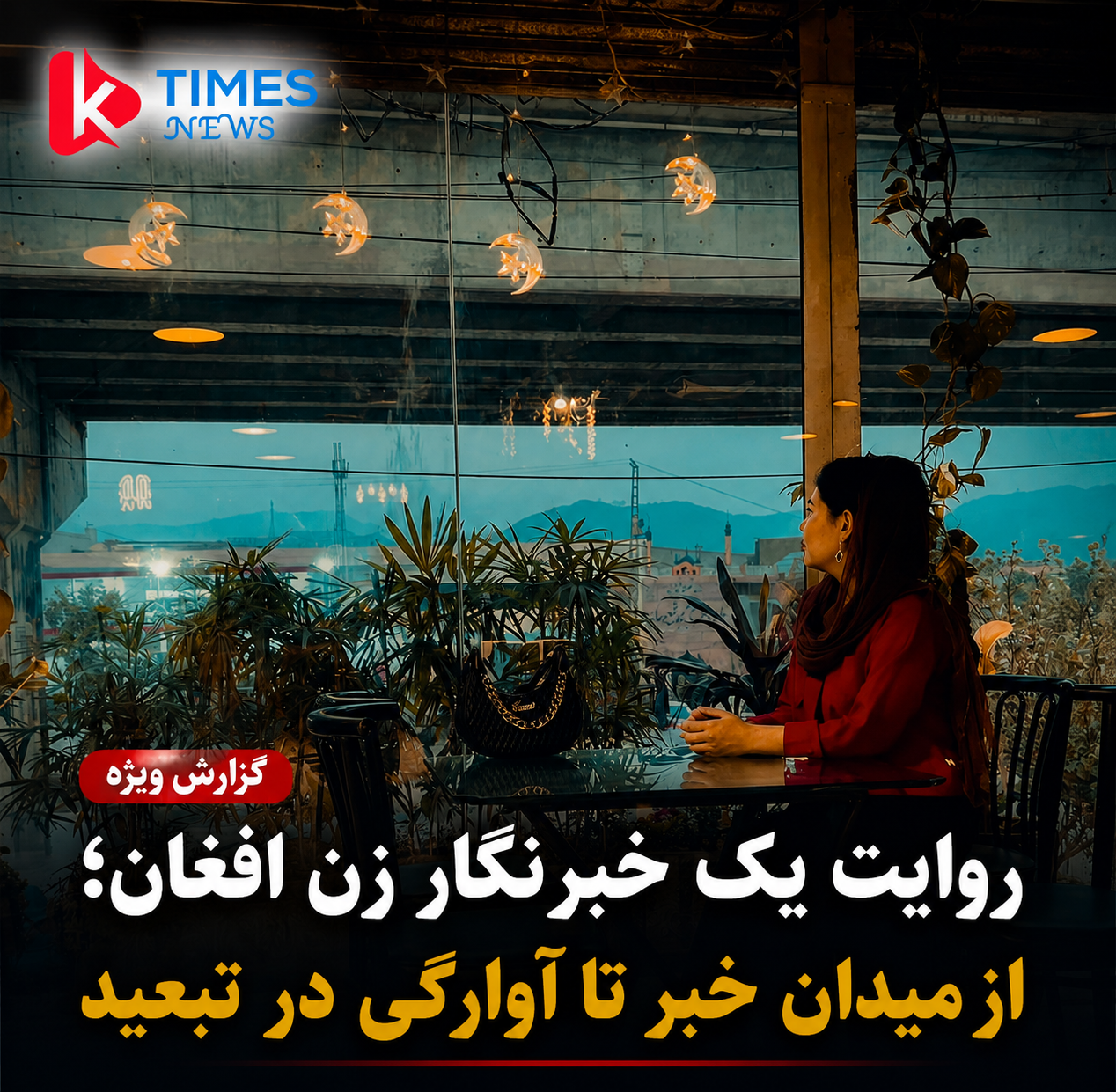
The Wounds of Exile: The Bitter Story of an Afghan Woman Journalist
An Afghan Woman Journalist’s Story of Suppression, Displacement, and Being Forgotten
By Sakina Naseri | Special to Kabul Times News
"Women do not belong in places like this. Why did you bring a female journalist with you?"
Those words still echo in my ears.
The first time I heard them, I looked around the hall. It was filled with men wearing large turbans and carrying stern expressions. Their eyes reflected anger and resentment. To them, the presence of a woman in that gathering seemed unacceptable.
My colleague quietly told me, “They won’t let you in.”
Then he fell silent.
I knew why.
Because I was a woman.
At that moment, I told myself: if I retreat today, I will lose a part of my identity forever. How can a journalist who is afraid to enter the field claim to be the voice of others?
With determination, I entered the hall. They directed me to the farthest corner, a place where I could barely see what was happening. All I had in my hands was a microphone and a notebook. I wondered how people who were so offended by my presence could ever agree to speak with me.
But that day was only the beginning.
Again and again, I was reminded that as a female journalist, my place was on the margins. During video interviews, I was told to stand as far away from the camera as possible so my face would not be visible. Otherwise, permission to broadcast the interview would be denied.
One of the most painful moments of my career occurred while covering a report on electricity outages in Kabul’s Pul-e-Surkh area. The streets were crowded, and people were sharing their frustrations. Suddenly, the atmosphere changed. Young women hurried away, trying to avoid being seen.
A group of morality police officers accompanied by armed Taliban members approached us.
My colleague reassured me: “Don’t worry. We have official permission.”
Moments later, one of the officers angrily confronted us and slapped my colleague without warning.
“Why are you with a non-mahram woman?” he shouted.
I tried to explain that I was a journalist and carried a legal work permit. My response was met with violence. The officer struck the microphone from my hand, and an armed man hit me in the back with the butt of his rifle.
“Shameless woman, be quiet,” he said.
Our camera and equipment fell to the ground. People gathered around us, watching silently. No one dared to intervene. Some simply told me:
“Sister, go home. Do your cooking. What business do you have with journalism and cameras?”
After that day, every time I stood behind a microphone or in front of a camera, I felt a lump in my throat.
Journalism was never just a profession for me.
It was my identity.
Yet there came a moment when I was forced to choose between my safety and that identity.
Eventually, I left Afghanistan.
The country where I had struggled for years to attend university and become a journalist. I still remember the day the university entrance exam results were announced. We cried tears of joy. We studied hard and fought to reach the media industry because we believed our voices could make a difference.
We believed we could advocate for girls denied education, women deprived of work, and citizens stripped of their rights.
But circumstances changed so dramatically that we could no longer advocate for others; we were struggling simply to save ourselves.
Today, I have been living in Pakistan for nearly two years.
For many, migration may symbolize safety.
For us, it became another chapter of uncertainty.
Visa problems, fear of deportation, financial hardship, and an unknown future have become part of daily life.
Yet one question continues to haunt me:
Where are the organizations that claimed for years to defend journalists?
Many Afghan journalists who fled their country due to security threats now live under extremely difficult conditions. Yet very few organizations have provided meaningful support.
While discussions about freedom of expression and media protection continue, hundreds of journalists in exile remain largely invisible.
We once gave voice to others.
Today, we are the ones who need our voices to be heard.
No journalist leaves behind home, family, country, and career without reason.
Behind every exiled journalist lies a story of threats, intimidation, fear, and loss.
Now, more than ever, the international community, media advocacy groups, and defenders of press freedom must pay attention to the plight of Afghan journalists living in exile.
We are still here.
We are still writing.
We still have hope.
But to keep that hope alive, we need others to stand with us and amplify our voices—just as we once amplified the voices of others.
Sakina Naseri
Afghan Journalist in Exile
Pakistan
The Wounds of Exile: The Bitter Story of an Afghan Woman Journalist