# Energy Crisis in Afghanistan; Two-thirds of citizens still do not have access to electricity
### UN: Energy shortage poses serious challenges to economic development and basic services
Kabul Times News | Report: Shahbanu Noori
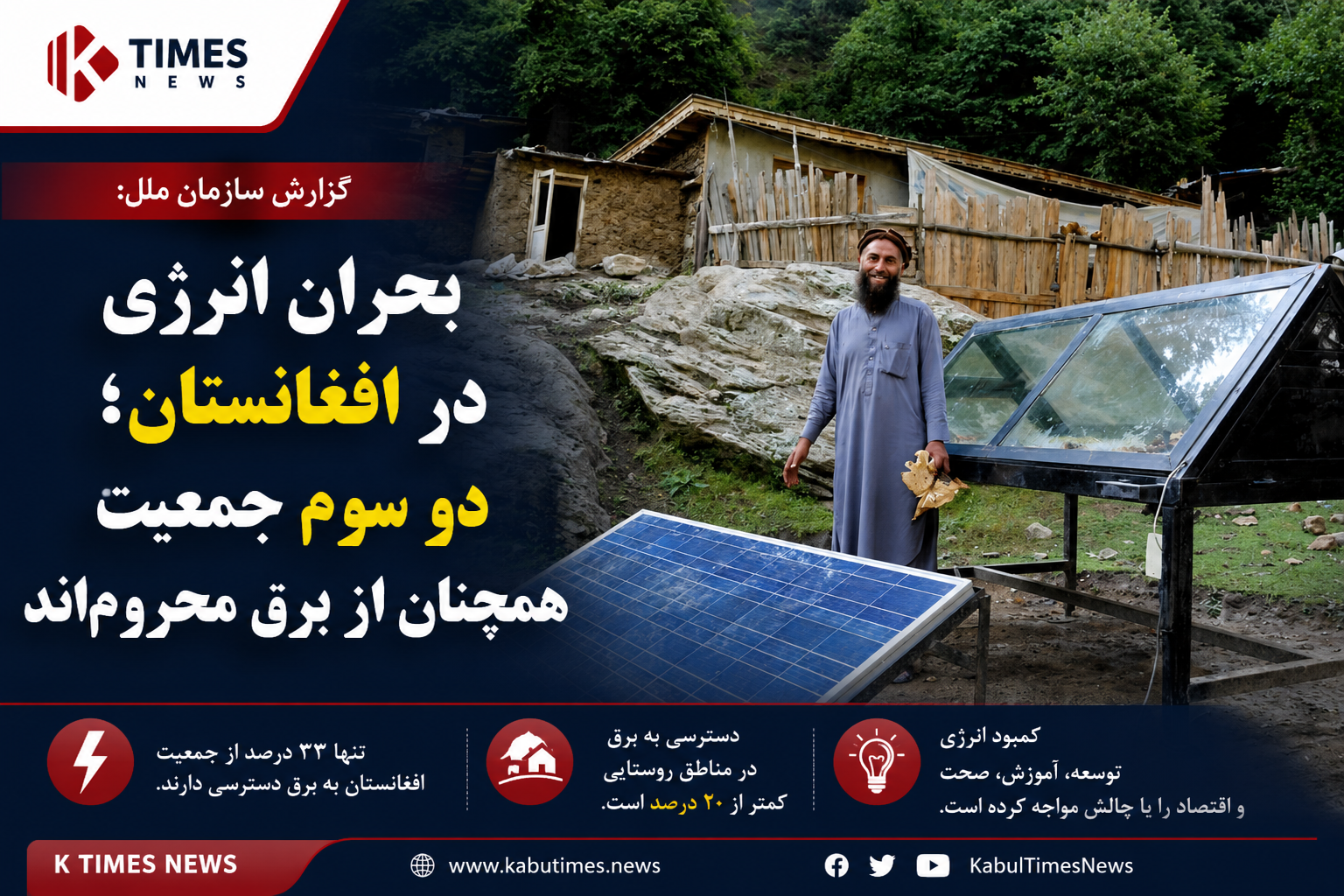
The United Nations Development Program (UNDP) has announced in its latest report that only about 33 percent of the Afghan population has access to electricity; a statistic that indicates the continuation of the energy crisis and the weakness of the electricity infrastructure in the country.
According to the report, the situation in rural areas is much more worrying, and the level of access to electricity in many of these areas is estimated to be less than 20 percent. This situation has deprived millions of Afghan citizens of access to basic services and economic opportunities.
The United Nations Development Program has emphasized that the lack of electricity is one of the most important obstacles to Afghanistan's development and has a direct impact on vital sectors including health services, education, drinking water supply, industrial growth and job creation.
The report states that many families, especially in remote areas, continue to rely on traditional fuels such as wood, coal and petroleum for their energy needs. The use of these resources not only increases the cost of living, but also has negative environmental and health consequences.
The United Nations has also warned that Afghanistan is among the most vulnerable countries in the world to climate change. Rising temperatures, reduced rainfall, frequent droughts and flash floods have put additional pressure on the country’s energy resources and infrastructure.
Economic experts believe that the lack of electricity is one of the main factors behind the slowdown in economic growth, reduced investment and limited production activities in Afghanistan. According to them, the lack of sustainable electricity has seriously hampered the development of small and medium-sized industries and reduced job opportunities.
The United Nations Development Program has emphasized the need to invest in sustainable energy projects, develop renewable energy sources, and expand electricity networks, and has considered it one of the essential prerequisites for improving the economic and livelihood situation of the Afghan people.
# Energy Crisis in Afghanistan; Two-thirds of citizens still do not have access to electricity