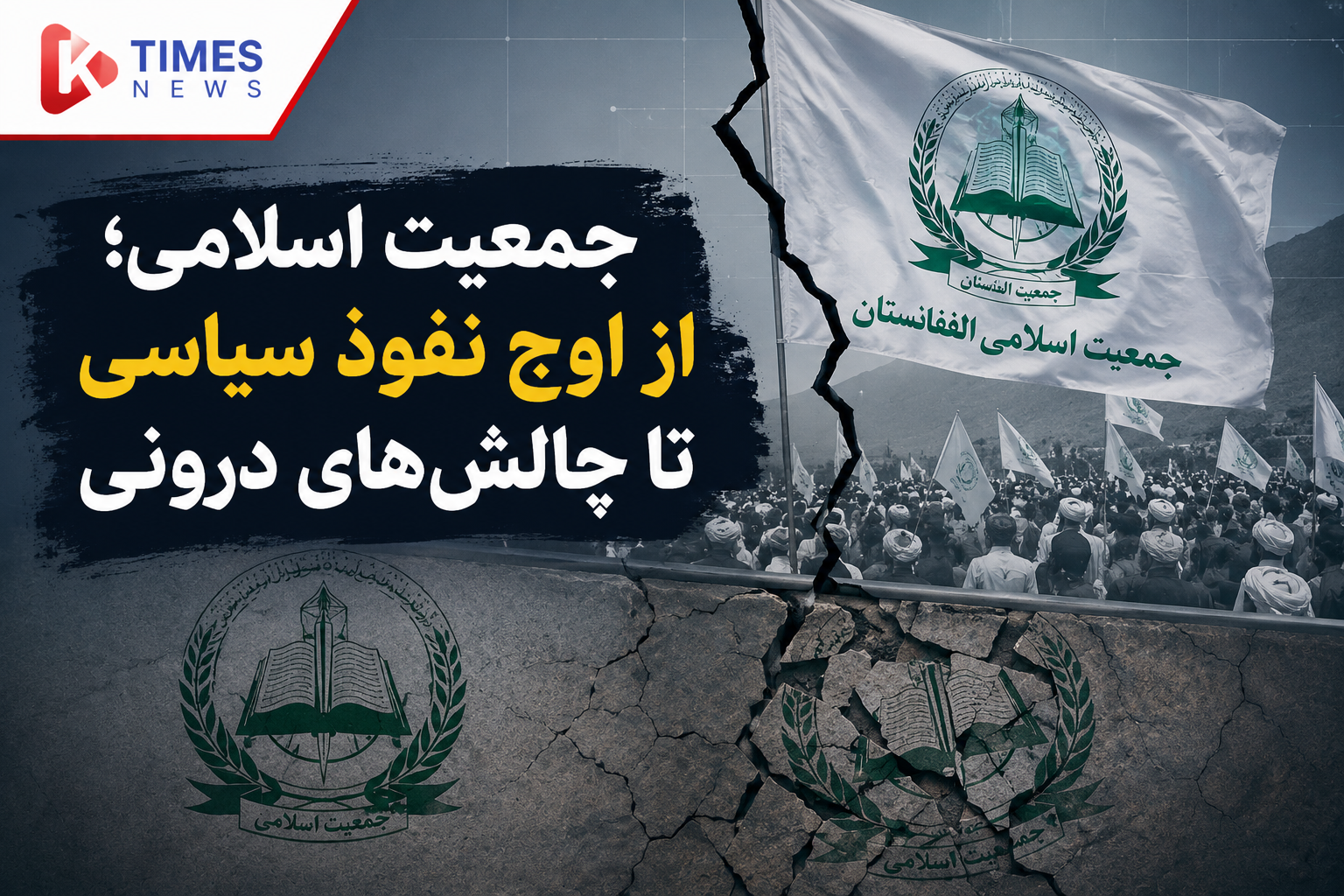
The collapse of the Jamiat-e-Islami in the whirlpool of internal disputes
A look at the factors that weakened one of the most influential political movements in Afghanistan
Special | Kabul Times News
Author: Zia-ul-Haq Haqqani
In the past decades, the Jamiat-e-Islami of Afghanistan was considered one of the most important and influential political and Islamic movements in the country. This party played a prominent role in the equations of Afghanistan during the jihad against the Soviet occupation and also in the political developments that followed, and for years it was known as one of the largest political movements in the country.
However, the Jamiat-e-Islami today faces serious internal challenges; challenges that, according to many observers, have significantly weakened the political and social position of this party. Leadership disputes, successive splits, and the lack of a clear strategy for the future are among the factors that have faced this party with an internal crisis.
In recent years, a number of prominent figures in Jamiat-e-Islami have separated from the party and created independent political movements and parties. This process has led to a decrease in organizational cohesion and the dispersion of political forces affiliated with Jamiat-e-Islami.
Some critics believe that Jamiat-e-Islami has failed to adapt to the new political and social developments in Afghanistan. In their view, excessive focus on the jihadi past and little attention to the needs of the new generation have reduced the party's influence among the youth and emerging segments of society.
### Factors that weakened Jamiat-e-Islami
A number of political analysts believe that the following factors have contributed to the decline in the role and influence of Jamiat-e-Islami:
1. Internal disputes and leadership competitions
Disagreements between the party's leaders and factions are considered one of the most important reasons for the weakening of Jamiat-e-Islami's organizational structure.
2. Lack of a coherent political program
After the recent developments in Afghanistan, Jamiat-e-Islami has failed to present a clear and unified program for the country's future.
3. Distancing from the Young Generation
Many of today's young people in Afghanistan have less contact with traditional party structures, and political parties have failed to respond to the demands of the new generation.
4. Scattering of political forces
The creation of multiple movements and parties by former figures of the Jamiat-e-Islami has reduced the cohesion and political power of this movement.
### The Future of the Jamiat-e-Islami
Despite existing problems, the Jamiat-e-Islami is still considered a part of Afghanistan's contemporary political history and has a social base in some regions of the country. However, restoring the party's past position will require structural reforms, organizational restructuring, attracting young forces, and developing a political strategy appropriate to the current conditions in Afghanistan.
Many observers believe that any political movement must adapt to the political, social, and cultural realities of the day in order to survive and have an impact in the new Afghan environment; an issue that could also be decisive for the Jamiat-e-Islami.
The collapse of the Jamiat-e-Islami in the whirlpool of internal disputes