Strategic Straits of the World: The Hidden Architecture of Power in International Politics
Introduction
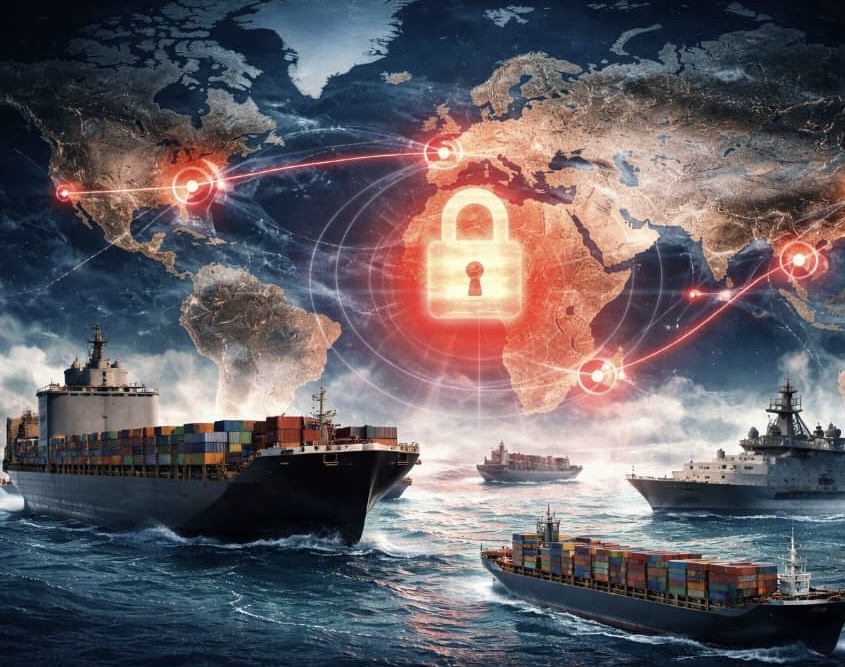
In the contemporary geopolitical system, power is no longer defined solely by terrestrial borders or military capabilities; it is shaped by control over “vital nodes of global flow.” Among these, straits and maritime passages constitute the most critical points of concentration for world power. These geographically constrained locations have effectively become levers of economic pressure, instruments of political deterrence, and arenas of security competition among great powers. Any disruption in these chokepoints can instantly reshape energy prices, global trade security, and the balance of international power.
1. The Geopolitical Logic of Straits: From Geography to Power
Maritime straits are far more than natural passageways; they serve as “points of power compression” within the global trade network. Their importance stems from three primary layers:
a) Economic Layer
A significant portion of the world’s energy trade (oil and natural gas) and containerized goods passes through these narrow and limited routes. This geographical concentration dramatically increases the cost of any disruption.
b) Security Layer
The persistent presence of major powers’ naval forces in these waterways demonstrates their transformation into domains of direct military rivalry.
c) Political Layer
Control over—or even the threat to—these passages has become a powerful bargaining tool in international relations. Some states leverage their geographical position as a “structural lever of pressure.”
In essence, straits represent the intersection of the global economy and the politics of power.
2. Key Chokepoints of the Global System
The Strait of Hormuz
This strait is one of the most sensitive energy arteries in the world, connecting the Persian Gulf to the open waters of the Gulf of Oman. Its importance lies not only in the massive volume of oil exports but also in the concentration of major energy producers along its shores. This feature has turned the Strait of Hormuz into a “geopolitical deterrence point,” where even minor political tensions can directly impact the global energy market.
The Bab el-Mandeb Strait
This gateway links the Red Sea to the Indian Ocean and serves as the southern entrance to the Suez Canal. Its significance stems from being one of the shortest routes connecting Europe and Asia. Recent increases in military presence and regional tensions have shown that Bab el-Mandeb has become a “multi-layered security node.”
The Strait of Malacca
This strait is the vital artery of East Asia. A substantial share of energy and industrial goods trade between China, Japan, and South Korea passes through it. From a geopolitical perspective, Malacca has evolved into a sensitive point in naval power competition, and control over it implies indirect influence over the economies of East Asia.
The Suez Canal
Although artificial, the Suez Canal effectively functions as a strategic strait. It provides the shortest route between the Mediterranean Sea and the Red Sea and plays a crucial role in linking Europe and Asia. Recent crises have demonstrated how heavily global supply chains depend on this passage.
The Panama Canal
This canal forms the backbone of trade between the Atlantic and Pacific Oceans. Its importance lies primarily in significantly reducing time and cost of transport between the two coasts of the Americas. The Panama Canal illustrates how an engineered chokepoint can achieve a geopolitical status comparable to natural straits.
3. Why Has Competition Over Straits Intensified?
Developments in the international system over recent decades have strengthened three main trends:
1. Globalization of Supply Chains: Interdependence among economies means that a disruption in one location can trigger a worldwide domino effect.
2. Securitization of Energy: Energy has shifted from a purely economic commodity to a strategic tool for exercising political power.
3. Return of Great Power Competition: The increased naval presence of global powers in international waterways has turned these areas into arenas of direct and overt rivalry.
As a result, straits are no longer mere transit routes; they have become “instruments for controlling the global flow of power.”
Conclusion
The world’s strategic straits are points where the international order is compressed; locations where economy, security, and politics converge in a single space. From the Strait of Hormuz to the Panama Canal, these passages demonstrate that geography remains one of the most decisive factors of power in the twenty-first century. Understanding global politics without a thorough grasp of these chokepoints yields an incomplete and insufficient comprehension of the real mechanisms of power. A large part of today’s geopolitical rivalries is not decided in capital cities, but rather in these narrow and vital passages.
Strategic Straits of the World: The Hidden Architecture of Power in International Politics