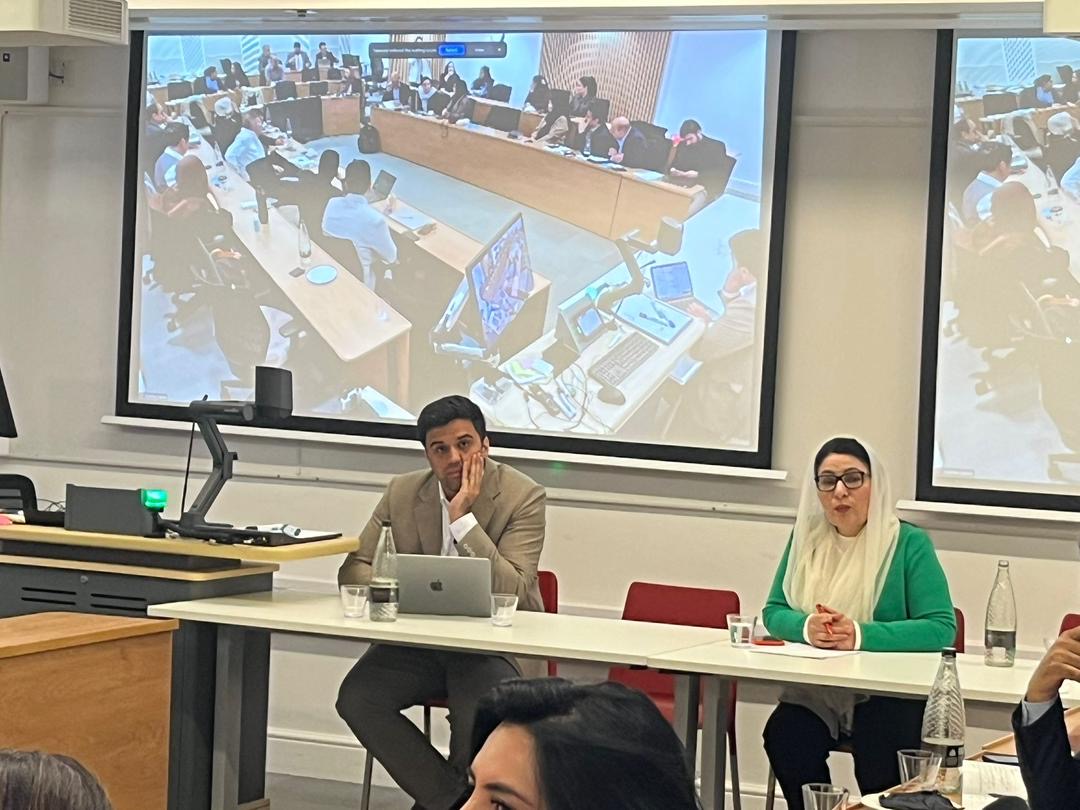
On May 19, the “Faragir” organization held a one-day conference in the United Kingdom with the participation of Afghan experts residing in Britain. The meeting aimed to bring together specialists from civil society, the private sector, academic institutions, and human rights activists to provide a platform for professional discussions on the most urgent issues facing Afghanistan.
The event created an opportunity for exchanging views, examining emerging challenges, and developing new strategies and solutions regarding Afghanistan’s current situation. Participants emphasized the need for greater coordination and cohesion among Afghans in the areas of advocacy, social justice, and sustainable development.
The conference included three specialized panels in which Afghan experts, researchers, and human rights defenders analyzed key national issues.
The organizers stated that the main objective of the conference was to foster a deeper understanding of Afghanistan’s current situation and to facilitate constructive dialogue among Afghan experts based in the UK—dialogue that could lead to cooperation, alignment, and the formulation of effective approaches for Afghanistan’s future.
The main themes of the conference included:
* A detailed review of Afghanistan’s most pressing challenges, particularly in the fields of human rights, the economy, humanitarian conditions, and geopolitics
* Providing information on existing international accountability mechanisms for advancing peace and social justice in Afghanistan
* Examining challenges and opportunities for advocacy regarding Afghanistan in 2026 and 2027
* Assessing the strengths and weaknesses of current advocacy approaches and developing a strategic framework for future action
Asila Wardak, a women’s rights activist and former diplomat, emphasized the shared responsibility of all Afghans, stating:
“It is the responsibility of all Afghans, men and women alike, to raise a stronger, more coordinated, and unified voice for accountability mechanisms in Afghanistan.”
Muzamal Shinwari, former Deputy Minister of Commerce and professor at the American University of Afghanistan, referring to the country’s fragile economic situation, stated:
“Afghanistan’s economic instability is the result of short-sighted policies that have merely replaced one dependency with another. The Taliban’s failure to establish a balanced trade strategy has shifted Afghanistan from dependence on Pakistan to a dangerous dependence on Iran, exposing the economy to repeated regional crises and political shocks.”
Naghma Mehrdad, a former diplomat, also stressed that Afghanistan’s crisis is not merely an internal or humanitarian issue but has broader regional and international implications:
“The world must understand that Afghanistan is not only a humanitarian crisis; it is an important issue for regional and international stability, and without global consensus, managing this crisis will be difficult.”
Meanwhile, Kamela Sediqi, former Deputy Minister of Industry and Commerce, highlighted the growing challenges facing the private sector, saying:
“Today, Afghanistan’s private sector faces major challenges such as a weak banking system, capital flight, a sharp decline in people’s purchasing power, employment restrictions, lack of political stability, and a shortage of skilled labor. These problems have severely hindered economic growth and business activity.”
Participants of the conference emphasized that Afghanistan is currently in one of the most sensitive stages of its modern history—a stage that requires a coordinated, realistic, and collaborative approach between Afghans and the international community.
At the conclusion of the meeting, emphasis was placed on continuing expert dialogues, strengthening international advocacy, and supporting the fundamental rights of the Afghan people—steps that could play a key role in shaping a more stable and just future for the country.
Afghanistan Amid Crises From Challenges to Global Solutions in a Changing World