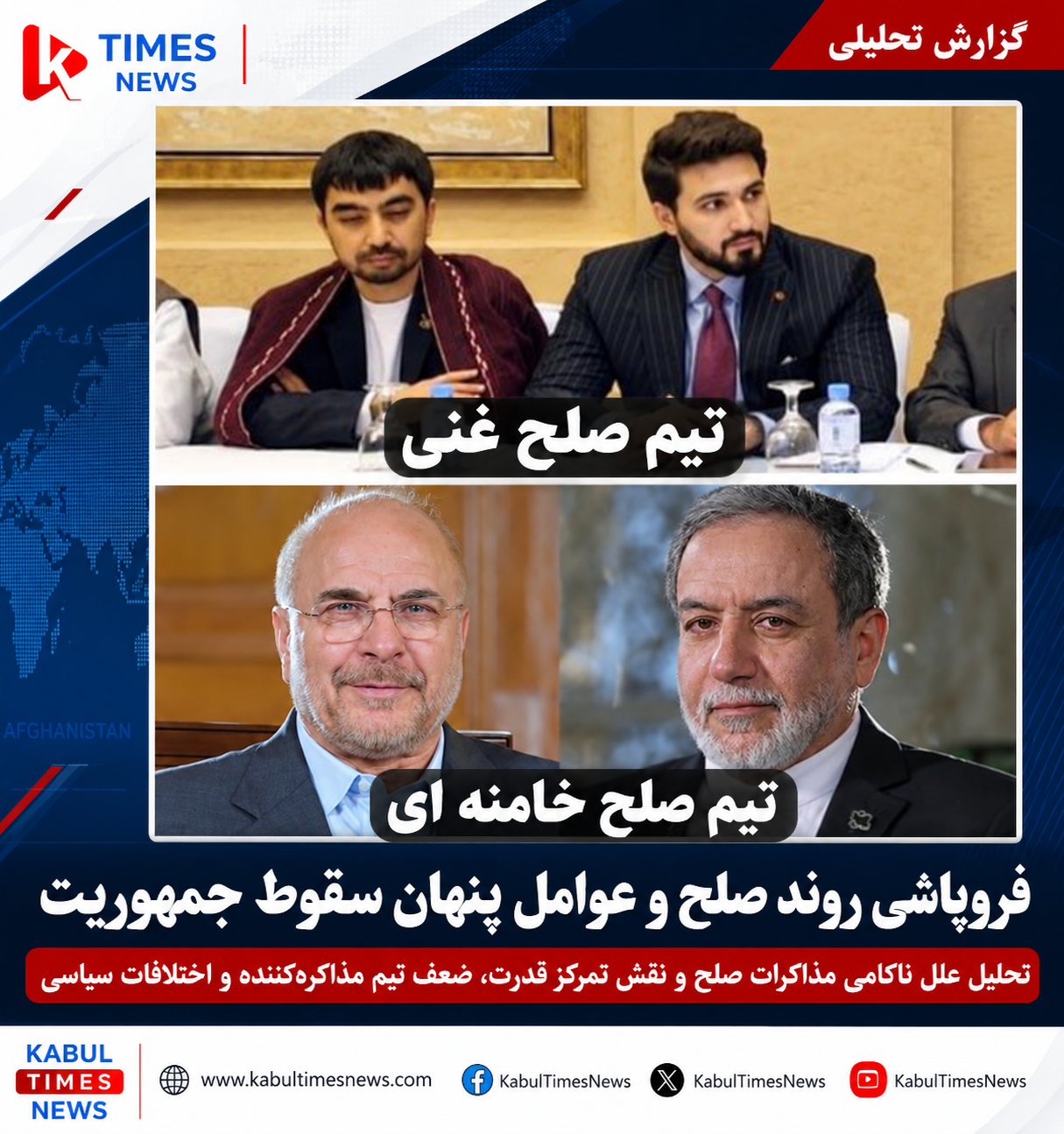
The Collapse of the Peace Process and the Hidden Factors of the Fall of the Republic
A Look at the Role of Political Weakness, Concentration of Power, and the Failure of Peace Negotiations
Kabul Times News | Analytical Report
In examining the factors that led to the collapse of the Afghan republic, the focus is usually on military defeats, the withdrawal of foreign forces, and the advance of the Taliban; however, a number of analysts believe that the main roots of the collapse of the republic should be sought in the failure of the peace process and its political management.
According to this view, the peace negotiations process, which could have paved the way for a political solution to end the war, failed to achieve the desired result due to a lack of political will, internal disputes, and the structural weakness of the government’s negotiating team. Critics say that former Afghan President Mohammad Ashraf Ghani relied more on the continued military presence and political support of foreign countries than on his belief in the success of the negotiations.
According to the author of this analysis, one of the most important weaknesses of the previous government was a lack of trust in the negotiation process. While peace talks were presented as a political solution to end the war, many senior government decision-makers continued to seek the survival of the regime through continued foreign military support. This approach caused the peace talks to become a ceremonial and tactical tool rather than a national priority.
On the other hand, the composition of the republic’s negotiating team also faced widespread criticism. Critics believe that instead of using experienced, influential figures with broad political support, the team included individuals who did not have sufficient authority and experience to advance sensitive peace negotiations. This situation caused the negotiating team to appear in a weaker position vis-à-vis the other side.
Another major challenge was the lack of decision-making independence in the negotiating team. According to observers, many decisions required final approval from the presidential palace, which limited the team’s flexibility and speed in the negotiations process. While Taliban negotiators had broader authority, government representatives were forced to refer to Kabul for many decisions.
The lack of political consensus among the republic’s leaders is also cited as another factor that contributed to the failure of the peace process. Disagreements between the ARG and other political movements, including over the composition of the negotiating team and the manner of managing the talks, prevented the government from entering the negotiations with a unified and coherent position. These political divisions, analysts believe, weakened the republic’s position against the Taliban.
The analysis also points to the decision-making environment in the ARG; an environment that, according to the author, was distant from political and field realities and relied too much on international legitimacy and foreign support. Critics believe that this approach prevented understanding the existing realities and making effective decisions to preserve the system.
The analysis concludes that the fall of the republic was not only the result of military defeats, but also a political and managerial failure in the peace process and the creation of a national consensus. The author emphasizes that the experience of the republic showed that a peace that is not accompanied by political will, internal cohesion, and true belief not only fails to achieve results, but can also pave the way for larger crises.
The Collapse of the Peace Process and the Hidden Factors of the Fall of the Republic