Alleged Taliban Footprint in the Deadly Attack on Shia in Herat – Analysis Based on Local Evidence and Cultural-Security Context
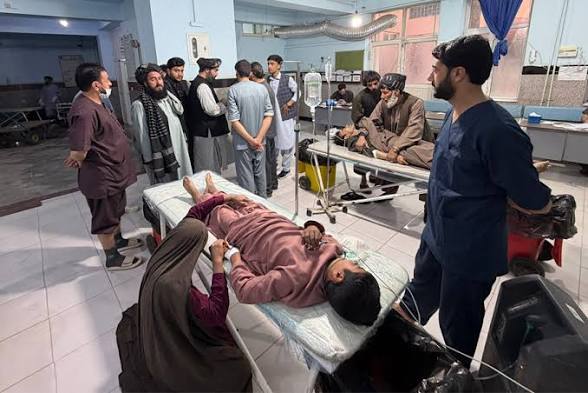
Herat, Afghanistan – In an armed attack on Friday (21 Hamal 1405 / approximately April 10-11, 2026) targeting Shia civilians in the village of Dahmiri (Deh Miri), Injil district of Herat province, near the Sayed Mohammad Agha shrine, at least 11 people were killed and several others wounded. Local sources and hospital reports cite higher figures, with some mentioning 12 killed and up to 30-37 casualties (killed and injured) overall. The victims were primarily families, including women and children, who had gathered for a spring picnic, recreation, and religious visitation (such as reciting Dua Nudba) at the shrine. Attackers were unidentified gunmen on motorcycles who reportedly separated men from women and children before opening fire. 
This incident occurred amid rising spring recreational activities and family outings in Herat, a phenomenon deeply rooted in the region’s ancient civilizational traditions that celebrate joy, especially during Nowruz and the new year. Such cultural expressions have long been viewed as problematic by the Taliban, whose Ministry for the Promotion of Virtue and Prevention of Vice has consistently sought to restrict them through strict policies.
Claims of Taliban Involvement: Cultural, Religious, and Security Indicators
Conversations with several informed local residents of Herat point to multiple pieces of circumstantial evidence suggesting Taliban complicity or facilitation in this deadly attack. One key factor is the deep clash between Herat’s rich, joy-oriented culture—grounded in its ancient heritage—and the Taliban’s theocratic approach. The recent surge in spring family outings is seen by some Taliban figures as a sign of failure in their cultural engineering efforts, prompting an attempt to strike back, sow fear, and halt this trend through a bloody operation.
Targeting Shia civilians (often labeled as “Rafidi” or pseudo-Muslims in extremist Taliban discourse) could serve dual purposes: instilling terror among the Shia and Ismaili communities while deflecting blame toward ISIS-K (Daesh). This aligns with the widespread sectarian mindset within Taliban ranks. The group’s overt policy of structural discrimination against Shia and Ismailis—including pressures for religious conversion and systemic restrictions—further fuels suspicions of their involvement.
Theocratic regimes that blend politics with religion rarely escape religious prejudice and discrimination. Iran’s religious system has subjected Sunnis to such systematic bias for half a century; the Taliban’s religious system now appears to apply a similar approach toward Shias.
Analyst Mohammad Mohaq (in his note titled “The Footprint of the Taliban in the Attack on Shias of Herat”) highlights these indicators, emphasizing that such actions are facilitated by prevalent mindsets among the Taliban.
Military, Security, and Intelligence Perspective
From a military, security, and intelligence standpoint, many observers conclude that no actor other than the Taliban could be behind this incident.
• In the past, particularly during the Republic era, the Taliban repeatedly targeted Shia gathering places across the country.
• Taliban spokespersons have repeatedly claimed that they have completely suppressed ISIS-K, asserting that the group no longer has the capacity for major operations, and that no other armed group exists capable of striking against the Taliban regime or civilians.
• As the current rulers with extensive governmental resources and intelligence capabilities (including remnants of the Republic-era intelligence apparatus), the Taliban are well-positioned to investigate such attacks using specialized techniques. Discovering the perpetrators should not be difficult, yet past failures to properly pursue crimes (due to powerful actors and corruption during the Republic era) raise similar concerns today.
The National Resistance Front of Afghanistan (NRF) and the Afghanistan Freedom Front (AFF) have condemned the attack, with the latter accusing the Taliban governor of Herat of facilitating and coordinating with extremist networks. Some local voices and activists directly attribute the massacre to Taliban elements, citing the delayed security response despite their nearby presence. 
Reactions and Conflicting Casualty Figures
Taliban officials described the attack as a “terrorist incident,” reported initial figures of 7 killed and 13 wounded (later revised to 11 killed by provincial authorities), and announced the arrest of one suspect. Local sources, hospitals, and independent media report significantly higher casualties, with victims confirmed as mostly Shia Hazara. Shops in Herat closed in protest the following day.
No group, including ISIS-K, has credibly claimed responsibility so far, though initial unverified reports pointed in that direction. Critics note that the Taliban’s repeated assertions of having eliminated ISIS-K capacity stand in contradiction with such incidents.
Broader Context
This attack fits into a long pattern of violence against Shia (especially Hazara) communities in Afghanistan. Previous incidents at mosques, cultural centers, and gatherings have often been attributed to ISIS-K, but critics highlight the Taliban’s role in facilitation, lack of serious protection, or structural discrimination. The recent arrest of a Shia cleric in Herat has heightened concerns.
UN Special Rapporteur Richard Bennett has called for an independent investigation. Analysts describe the event as part of continued targeted violence against Shias, labeling it a crime against humanity rooted in extremist ideology.
As of this report, the Taliban’s investigation continues, but many local observers question its transparency and independence. The incident once again underscores the serious challenges of security, culture, and religious coexistence under Taliban rule, raising urgent questions about the protection of minority communities.
Alleged Taliban Footprint in the Deadly Attack on Shia in Herat – Analysis Based on Local Evidence and Cultural-Security Context